🚀 Post-Independence India
Partition, Constitution, wars, and modern India.
🇮🇳 Building a Nation from Scratch
On August 15, 1947, India became independent after 190 years of British rule. But freedom came with enormous challenges.
Partition (1947): British India was divided into India and Pakistan. About 10–12 million people were displaced in the largest human migration in history. An estimated 200,000–2,000,000 were killed in communal violence. Mahatma Gandhi was assassinated on January 30, 1948 by Nathuram Godse.
Integration of princely states: India had 562 princely states. Sardar Vallabhbhai Patel (Iron Man of India) convinced/pressured them all to join India — except Hyderabad (police action), Junagadh (plebiscite), and Jammu & Kashmir (still disputed).
Indian Constitution: Drafted by a Constituent Assembly chaired by Dr. B.R. Ambedkar. Adopted November 26, 1949. Came into effect January 26, 1950 (Republic Day). World's longest written constitution.
First General Election (1952): World's largest democratic exercise at the time — 176 million voters. Congress won 364/489 seats. Jawaharlal Nehru became the first elected PM.
• Federal + Unitary — states have powers, but Centre stronger during emergencies
• Parliamentary democracy — President (head of state), PM (head of government)
• Fundamental Rights (Part III) — 6 rights: Equality, Freedom, Against Exploitation, Religion, Culture/Education, Constitutional Remedies (most important)
• Directive Principles (Part IV) — non-enforceable but guide policy
• Fundamental Duties — added by 42nd Amendment (1976)
• Secular, Socialist, Sovereign, Democratic, Republic — added to Preamble by 42nd Amendment

• 1947–48 — First Kashmir War with Pakistan
• 1962 — Sino-Indian War (China) — India lost. Led to massive military modernization.
• 1965 — Second war with Pakistan. Ended in stalemate (Tashkent Agreement).
• 1971 — Bangladesh Liberation War. India defeated Pakistan in 13 days. Bangladesh created.
• 1999 — Kargil War. Pakistan infiltrated Indian positions. India recaptured them.
• Green Revolution (1960s–70s) — Norman Borlaug + M.S. Swaminathan transformed food production. India went from food-importer to food-exporter.
• Space program — ISRO (1969). Chandrayaan-1 (2008, discovered water on Moon), Mangalyaan (2014, Mars mission — first try, cheapest ever), Chandrayaan-3 (2023, soft landing on Moon's South Pole).
• Nuclear capability — Pokhran-I (1974, Smiling Buddha), Pokhran-II (1998, Operation Shakti).
• Economic growth — From one of the poorest nations to world's 5th largest economy (GDP) in 75 years.
India's Journey — Key Milestones
Animation77 years of democracy — India has faced wars, elections, economic crises, and emerged stronger each time.
India's Governments & PMs
Interactive1. Right to Equality (Articles 14–18) — equality before law, no discrimination, abolition of untouchability
2. Right to Freedom (Articles 19–22) — freedom of speech, assembly, movement, profession; protection from arbitrary arrest
3. Right against Exploitation (Articles 23–24) — prohibition of forced labor, child labor under 14
4. Right to Freedom of Religion (Articles 25–28) — freedom of conscience, worship, propagation
5. Cultural and Educational Rights (Articles 29–30) — minorities' rights to preserve culture, establish institutions
6. Right to Constitutional Remedies (Article 32) — Ambedkar called this "the heart and soul of the Constitution" — right to approach Supreme Court if any right is violated
Note: Right to Property was a Fundamental Right until 1978 (44th Amendment removed it, made it a legal right under Article 300A).
Reasons given: "Internal disturbance" threatening national security.
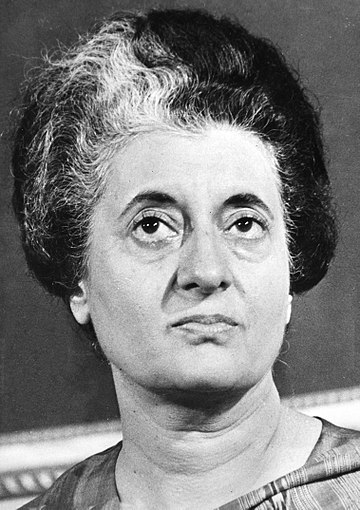
Real reasons: Allahabad High Court (June 12, 1975) found Indira Gandhi guilty of electoral malpractice in 1971 election — she was ordered to vacate her seat. She declared Emergency instead of resigning.
During Emergency:
• Fundamental Rights suspended
• Press censorship — newspapers had blank editorial spaces rather than publish censored content
• Opposition leaders arrested (J.P. Narayan, Vajpayee, Advani, George Fernandes)
• Forced sterilization program caused public outrage
• 42nd Amendment made sweeping changes to Constitution
Lifted March 1977. Congress lost the 1977 election — first time. Emergency is considered the darkest chapter of Indian democracy.